


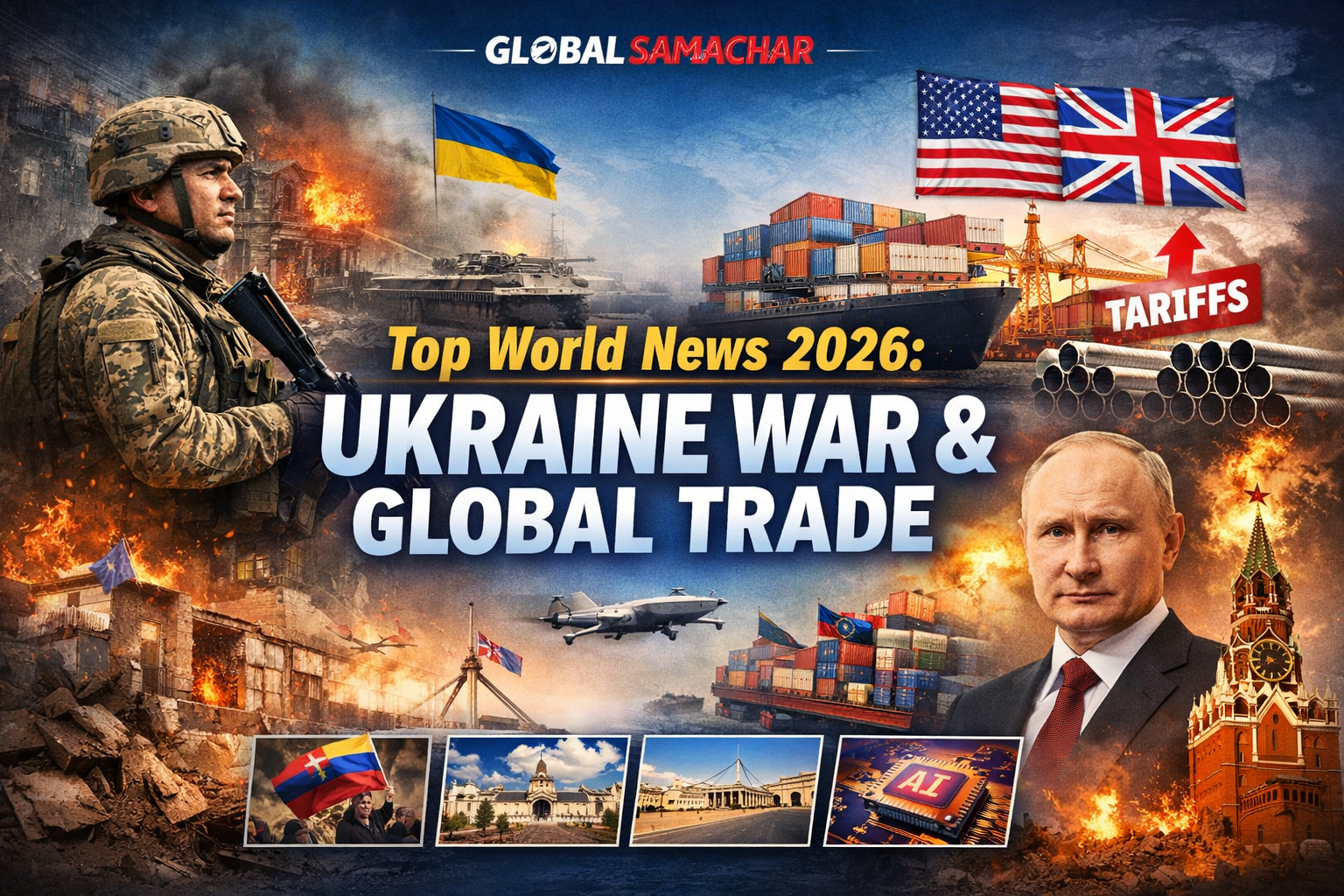
Ukraine-Russia War Enters Fifth Year: Peace Talks Stall as Conflict Intensifies
Ukraine War & Global Trade Updates The Russia-Ukraine war has now entered its fifth year since Russia launched its full-scale invasion in February 2022. What began as a rapid military assault has evolved into one of the most prolonged and devastating conflicts in modern European history. Despite multiple diplomatic efforts and international mediation attempts, peace remains elusive.
Background of the Conflict
Russia invaded Ukraine in early 2022, triggering global outrage and leading to widespread sanctions from Western nations. The invasion was initially expected by many analysts to result in a swift Russian victory. However, Ukraine mounted strong resistance, supported militarily and financially by Western allies including the United States and European Union.
Over the years, the war has transformed into a grinding battle of attrition. Key regions such as Donetsk, Luhansk, Kherson, and Zaporizhzhia have witnessed heavy fighting. Frontlines have shifted multiple times, but no decisive breakthrough has occurred for either side.
Table of Contents
Recent Peace Talks and Diplomatic Deadlock
In early 2026, another round of international peace negotiations was held in Geneva. These talks involved representatives from Ukraine, Russia, and mediating global powers. However, discussions ended without any meaningful breakthrough.
Ukrainian President Volodymyr Zelensky accused Russian officials of engaging in “political games,” suggesting that Moscow is deliberately prolonging negotiations without genuine intention of ending the war. According to Ukrainian officials, Russia continues to demand territorial concessions that Ukraine considers non-negotiable.
Russia, on the other hand, maintains that its security concerns must be addressed before any long-term settlement can be reached. These fundamentally opposing positions have stalled diplomatic progress.
Key Issues Blocking Peace
Several major issues continue to prevent a peace agreement:
- Territorial control over occupied Ukrainian regions
- Security guarantees for Ukraine from Western allies
- Status of Crimea and eastern territories
- Control over strategic infrastructure including nuclear facilities
- Long-term military presence and NATO expansion concerns
Until compromise is reached on these matters, the likelihood of a comprehensive peace deal remains low.
Humanitarian Impact
The human cost of the war is staggering. Millions of Ukrainians have been displaced internally or have fled to neighboring European countries. Civilian infrastructure, including hospitals, schools, and energy grids, has been repeatedly targeted.
Casualty figures on both sides continue to rise. Military analysts estimate hundreds of thousands of soldiers have been killed or injured. The war has also severely impacted Ukraine’s economy, with reconstruction costs projected in the hundreds of billions of dollars.
Global Consequences
The Ukraine-Russia war has reshaped global geopolitics. NATO expansion, increased European defense spending, energy market disruption, and global food supply instability are all direct consequences of the conflict.
The war continues to dominate international headlines because its outcome could redefine European security architecture for decades.
Global Trade Update: US-UK Tariff Talks and International Economic Uncertainty
Global trade policy has entered a new phase of uncertainty following major tariff decisions by the United States government. The situation has significant implications for the United Kingdom and other global trading partners.
Background of the Tariff Dispute
In recent years, the United States implemented new tariffs aimed at protecting domestic industries and addressing trade imbalances. However, legal challenges led to the rollback of several tariffs by the U.S. Supreme Court, creating confusion in global markets.
In response, the U.S. administration introduced a revised global tariff framework, including a proposed 15% import tariff under alternative legal authority. This move has generated debate among economists, lawmakers, and international trade partners.
Impact on the United Kingdom
The UK had previously negotiated a trade understanding with the United States to maintain favorable tariff conditions on goods such as steel, automobiles, and pharmaceuticals. The new U.S. tariff approach raised concerns about whether these agreements would remain intact.
British officials have stated that they do not expect major disruptions to the core elements of the trade deal. However, negotiations remain ongoing to clarify terms and prevent unexpected economic consequences.
The UK government has also indicated that retaliatory measures could be considered if trade agreements are undermined, although both sides have emphasized cooperation rather than confrontation.
Global Market Reactions
International markets have responded cautiously. Stock indices in Europe and Asia showed volatility following tariff announcements. Businesses operating across borders are facing uncertainty regarding supply chains, pricing strategies, and investment decisions.
Industries most affected include:
- Automotive manufacturing
- Steel and heavy industry
- Technology hardware
- Consumer goods import/export businesses
Trade experts warn that prolonged tariff uncertainty could slow global economic growth and strain diplomatic relations.
Why It Matters
Trade stability is critical for global economic health. Sudden changes in tariff policy can disrupt supply chains, increase consumer prices, and reduce investor confidence. The outcome of ongoing US-UK tariff negotiations will likely influence broader global trade policies in 2026 and beyond.
Russia’s Internal Divisions and Continued War Pressure
While the war continues on Ukrainian territory, analysts report signs of internal pressure within Russia’s political and military establishment.
Kremlin Dynamics
President Vladimir Putin has publicly honored military personnel and emphasized national unity. However, reports suggest there may be growing frustration among segments of Russia’s ruling elite regarding the prolonged conflict and economic strain caused by sanctions.
Internal divisions, if confirmed, could affect strategic decision-making in Moscow. Extended wars often test domestic political stability, especially when economic hardship increases.
Drone Strikes Inside Russia
Another recent development includes reports of drone strikes occurring within Russian territory. These incidents mark an expansion of the conflict’s geographical scope and demonstrate Ukraine’s evolving military capabilities.
The psychological impact of attacks on Russian soil has raised security concerns and prompted discussions about air defense modernization.
Economic and Military Strain
Western sanctions continue to target Russia’s financial system, energy exports, and access to advanced technology. While Russia has adapted through alternative trade partnerships, long-term economic growth remains under pressure.
Military spending has surged, diverting resources from civilian development. The sustainability of prolonged war financing remains a topic of debate among analysts.
Global Developments: Venezuela, Australia, Mexico, and China
Beyond Europe and trade disputes, significant events are unfolding across multiple continents.
Venezuela’s Amnesty Law
Venezuela recently implemented an amnesty law benefiting thousands of individuals. The law aims to ease political tensions and promote national reconciliation.
Supporters argue it may reduce polarization and create space for dialogue. Critics worry that broad amnesty provisions could weaken accountability for past actions.
The development reflects Venezuela’s attempt to stabilize its internal political climate amid economic recovery efforts.
Australia’s Antisemitism Inquiry
Australia has launched a national inquiry into antisemitism following recent violent incidents. The government seeks to investigate the causes of hate-motivated violence and strengthen social cohesion.
The inquiry will examine extremist influences, online radicalization, and institutional responses. This move signals growing global concern about rising hate crimes and the need for preventive strategies.
Mexico’s Military Deployment in Jalisco
In Mexico, authorities deployed thousands of soldiers to the state of Jalisco following the death of a cartel leader. The deployment aims to prevent retaliatory violence and maintain public order.
Cartel-related violence remains a significant security challenge in Mexico. Military involvement reflects the government’s continued reliance on armed forces to combat organized crime.
China’s AI Development Using Nvidia Chips
China’s technology sector continues advancing artificial intelligence capabilities. Reports indicate a major Chinese tech company is training a large AI model using Nvidia semiconductor chips despite ongoing export restrictions.
This development highlights global competition in AI technology. The race for AI leadership has strategic implications for economic growth, military innovation, and technological independence.
China’s determination to expand AI research demonstrates how technological competition remains a defining feature of modern geopolitics.
Conclusion: A World in Transition
The four major news developments discussed above reveal a world experiencing geopolitical tension, economic uncertainty, and technological transformation.
- The Ukraine-Russia war remains unresolved and continues reshaping global alliances.
- US-UK tariff discussions reflect broader instability in international trade systems.
- Internal pressures within Russia could influence future conflict dynamics.
- Global developments from Venezuela to China show shifting political and technological landscapes.
These stories matter because they influence global security, economic growth, and international relations. As 2026 unfolds, diplomatic decisions, military strategies, and economic policies will determine whether the world moves toward stability or deeper fragmentation.
ALSO READ MORE:-India vs Pakistan T20 World Cup 2026 Boycott
Frequently Asked Questions (FAQ)
Ukraine-Russia War FAQs
1. Why is the Ukraine-Russia war still continuing in 2026?
The war continues because both Ukraine and Russia hold fundamentally different positions on territorial control, security guarantees, and political conditions for peace. Russia demands recognition of occupied territories, while Ukraine refuses to give up sovereignty over its land. These disagreements have stalled peace negotiations.
2. What are the main obstacles to a peace agreement?
The key obstacles include:
- Control of eastern and southern Ukrainian territories
- Security guarantees for Ukraine from Western allies
- NATO expansion concerns
- Status of Crimea
- Long-term military arrangements
Until these issues are resolved, a comprehensive peace deal remains unlikely.
3. How has the war affected civilians?
Millions of Ukrainians have been displaced internally or have fled to other countries. Civilian infrastructure such as hospitals, schools, and power grids has been damaged. The humanitarian crisis remains severe, with ongoing reconstruction needs.
4. What impact has the war had globally?
The conflict has affected global energy prices, food supply chains, military spending, and NATO expansion. It has also increased geopolitical tensions between Russia and Western nations.
US-UK Tariff Talks & Global Trade FAQs
5. Why are US tariffs causing global trade uncertainty?
Recent changes in US tariff policy created legal and economic uncertainty. New tariff frameworks have raised concerns among trade partners about pricing, supply chains, and long-term agreements.
6. Will the US-UK trade agreement be affected?
While the UK government expects core elements of the trade deal to remain stable, negotiations are ongoing to ensure that new tariffs do not disrupt agreed trade conditions on goods like steel, automobiles, and pharmaceuticals.
7. How do tariffs affect consumers?
Tariffs increase the cost of imported goods, which can lead to higher prices for consumers. Businesses may also adjust supply chains or pass additional costs to buyers.
8. Which industries are most affected by tariff changes?
Industries commonly affected include:
- Automotive manufacturing
- Steel and heavy industries
- Technology hardware
- Consumer goods import/export sectors
Russia Internal Situation FAQs
9. Are there internal divisions within Russia regarding the war?
Some analysts suggest there may be frustration within parts of Russia’s political and military establishment due to prolonged conflict and economic sanctions. However, official statements emphasize unity.
10. What are drone strikes inside Russia?
Drone strikes reported within Russian territory indicate that the conflict’s reach has expanded. These incidents raise security concerns and demonstrate evolving military strategies.
11. How are sanctions affecting Russia’s economy?
Western sanctions target Russia’s financial system, technology access, and energy exports. While Russia has adapted through alternative trade relationships, long-term economic pressure remains significant.
Global Developments FAQs
12. What is Venezuela’s new amnesty law?
Venezuela implemented an amnesty law benefiting thousands of individuals. The law aims to reduce political tensions and promote reconciliation, though critics debate its long-term implications.
13. Why did Australia launch an antisemitism inquiry?
Australia initiated a national inquiry following violent incidents linked to antisemitism. The goal is to examine causes of hate crimes and strengthen policies to prevent future attacks.
14. Why did Mexico deploy soldiers to Jalisco?
Mexico deployed thousands of soldiers after the death of a cartel leader to prevent retaliatory violence and maintain public safety in the region.
15. Why is China’s AI development significant?
China’s continued AI development, including training large models with advanced semiconductor chips, highlights global competition in artificial intelligence technology. AI leadership is increasingly tied to economic and strategic power.
Broader Global Impact FAQs
16. How do these global events connect?
All these developments reflect broader global themes:
- Geopolitical conflict
- Economic uncertainty
- Security challenges
- Technological competition
They collectively shape international relations and global stability.
17. What should businesses monitor in 2026?
Businesses should monitor:
- Trade policy changes
- Sanctions developments
- Supply chain risks
- Energy market fluctuations
- AI and technology regulations
18. How could these events affect global markets?
Ongoing conflicts and trade uncertainty may increase market volatility, influence currency exchange rates, and impact investment decisions worldwide.
{ “@context”: “https://schema.org”, “@graph”: [ { “@type”: “Organization”, “@id”: “https://globalsamachar.com/#organization”, “name”: “Global Samachar”, “url”: “https://globalsamachar.com”, “logo”: { “@type”: “ImageObject”, “url”: “https://globalsamachar.com/logo.png” }, “sameAs”: [ “https://www.facebook.com/globalsamachar”, “https://www.twitter.com/globalsamachar”, “https://www.instagram.com/globalsamachar” ] }, { “@type”: “WebSite”, “@id”: “https://globalsamachar.com/#website”, “url”: “https://globalsamachar.com”, “name”: “Global Samachar”, “publisher”: { “@id”: “https://globalsamachar.com/#organization” }, “potentialAction”: { “@type”: “SearchAction”, “target”: “https://globalsamachar.com/?s={search_term_string}”, “query-input”: “required name=search_term_string” } }, { “@type”: “NewsArticle”, “headline”: “Top World News 2026: Ukraine-Russia War Update, US-UK Tariff Talks & Global Developments”, “description”: “Latest world news update covering Ukraine-Russia war, US-UK tariff negotiations, Russia internal tensions, and major global developments in Venezuela, Australia, Mexico and China.”, “author”: { “@type”: “Organization”, “name”: “Global Samachar” }, “publisher”: { “@id”: “https://globalsamachar.com/#organization” }, “datePublished”: “2026-02-24”, “dateModified”: “2026-02-24”, “mainEntityOfPage”: { “@type”: “WebPage”, “@id”: “https://globalsamachar.com/world-news-2026” }, “keywords”: [ “World News 2026”, “Ukraine Russia War Update”, “US UK Tariff Talks”, “Global Breaking News”, “International News Today” ] }, { “@type”: “FAQPage”, “mainEntity”: [ { “@type”: “Question”, “name”: “Why is the Ukraine-Russia war still continuing in 2026?”, “acceptedAnswer”: { “@type”: “Answer”, “text”: “The war continues due to disagreements over territorial control, security guarantees, and political conditions for peace between Ukraine and Russia.” } }, { “@type”: “Question”, “name”: “Will US tariffs affect the UK trade agreement?”, “acceptedAnswer”: { “@type”: “Answer”, “text”: “Negotiations are ongoing, but the UK government expects core elements of the trade agreement to remain stable despite new tariff policies.” } }, { “@type”: “Question”, “name”: “Why is China’s AI development important?”, “acceptedAnswer”: { “@type”: “Answer”, “text”: “China’s AI advancements highlight global competition in artificial intelligence technology, which impacts economic growth and strategic power.” } } ] } ] }